
Solar Self-Consumption and Backup Planning for Home Batteries
Solar self-consumption and backup planning depend on matching solar generation, household electricity demand, battery capacity, and backup requirements. A properly sized residential battery can increase solar self-use from around 30% without storage to 70%–90% in many homes. In 2024, residential battery installations continued growing in markets such as Australia, Germany, the United States, and Japan, mainly because electricity prices during evening hours often exceed solar export rates by 2–4 times.
Solar power production and household electricity use rarely happen at the same time. Most rooftop PV systems generate the highest output between 10:00 and 15:00, while residential demand usually rises after 17:00 when people return home. Without storage, many homes export 50% or more of midday solar generation back to the grid.
A battery system changes the electricity schedule by storing excess solar energy during the day and supplying household loads during evening and night periods.
A typical household with a 5 kW solar array may generate 20–30 kWh of electricity on a sunny day. If daytime consumption is only 8–10 kWh, the remaining 10–20 kWh can either be exported or stored. A battery with 10 kWh usable capacity can capture a large portion of this excess generation and reduce grid electricity purchases.
| Household Situation | Typical Daily Electricity Use | Suggested Battery Capacity |
|---|---|---|
| Small home | 10–15 kWh | 5–8 kWh |
| Average family home | 20–30 kWh | 10–15 kWh |
| Home with EV or electric heating | 35–60 kWh | 15–30 kWh |
Battery sizing should start with electricity consumption data rather than solar panel size alone. A 10 kW PV system does not always require a 20 kWh battery because solar output changes by season, weather conditions, and household behavior.
Smart meter records collected every 15 or 30 minutes over 12 months provide a clearer picture of electricity patterns. Seasonal differences can be significant, with winter electricity use in some regions increasing by more than 40% because of heating demand.
The relationship between solar generation and battery capacity affects how much renewable electricity a home can use directly. A small battery may reach full capacity early in the day and leave additional solar energy unused, while an oversized battery may remain partially empty for many days.
For example, a home producing 35 kWh of solar energy daily and consuming 25 kWh may only need 8–12 kWh of storage to cover evening demand. Increasing storage to 30 kWh may improve backup duration but may not increase daily self-consumption significantly.
Battery capacity should match household electricity patterns instead of simply increasing storage size.
Self-consumption planning and backup planning require different calculations. Solar self-consumption focuses on reducing grid electricity purchases, while backup planning focuses on maintaining power during outages.
During a grid outage, many homeowners do not need to power every appliance. A practical backup system usually supports essential circuits such as refrigeration, lighting, communication devices, security equipment, and selected kitchen appliances.
| Appliance | Typical Power Requirement |
|---|---|
| Refrigerator | 100–300 W |
| LED lighting | 50–200 W |
| Wi-Fi router | 10–30 W |
| Security system | 10–50 W |
| Medical equipment | 50–500 W |
| Small kitchen appliances | 500–1500 W |
A household using 1.5 kW of emergency power for 12 hours requires approximately 18 kWh of usable energy. Considering inverter losses and battery reserve settings, an installed battery capacity of 20–22 kWh may be more suitable.
Backup design also depends on inverter power output. A battery with 15 kWh capacity cannot support high-power appliances if the inverter cannot provide enough output power. Air conditioners, pumps, and motors may require 2–5 times their rated power during startup.
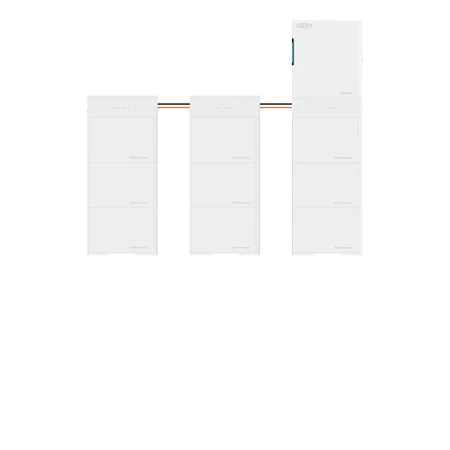
Modern residential solutions often combine battery modules, inverter, battery management system, and energy management software into one package. An all-in-one home energy storage system reduces the number of separate components required during installation and simplifies system configuration.
Compared with traditional systems using separate battery units and external controllers, integrated designs can reduce installation steps by approximately 30%–50% depending on equipment layout and electrical requirements. They also allow easier communication between the battery, inverter, solar panels, and household energy monitoring platform.
Energy management software has become an important part of residential storage systems. Modern systems can adjust charging and discharging based on solar production forecasts, electricity prices, and household consumption.
Common operating modes include:
| Operating Mode | Function |
|---|---|
| Solar priority | Solar powers loads first and charges the battery with extra energy |
| Time-based charging | Battery charges during lower electricity price periods |
| Backup reserve | Keeps a selected battery percentage for outages |
| Maximum self-use | Reduces electricity exported to the grid |
In regions with time-of-use electricity pricing, battery scheduling can reduce annual electricity costs by 20%–40%. A household may charge the battery when electricity prices are low and use stored energy during expensive evening periods.
Battery lifetime is affected by charging patterns, temperature, and depth of discharge. Most lithium iron phosphate residential batteries are designed for 4,000–8,000 cycles, which can represent 10–15 years of service depending on operating conditions.
Temperature management is especially important. Battery operation above 40°C can accelerate capacity loss, while moderate temperatures around 15–30°C generally support longer service life. After 10 years, many residential LFP batteries retain approximately 80% or more of their original capacity when properly managed.
Backup planning should also consider future electricity demand. Household energy use is changing as more homes add electric vehicles, heat pumps, and smart appliances.
An electric vehicle can require 10–30 kWh for a typical charging session. A home using 25 kWh per day today may increase to 40 kWh or more after adding EV charging and electric heating.
Modular battery systems provide flexibility because homeowners can expand storage later. A system installed with 10 kWh capacity may be upgraded to 20 kWh or 30 kWh by adding battery modules without replacing the entire installation.
The economics of residential batteries depend on electricity prices, solar output, incentives, and battery utilization. In areas with high electricity prices and low solar export rates, increasing self-consumption can provide stronger financial benefits.
A 2023 analysis of residential PV-plus-storage systems showed that households with higher evening electricity demand generally achieved better battery utilization because stored solar energy was used more frequently. Systems with regular daily cycling typically achieved higher annual energy throughput than systems used only during occasional outages.
A residential battery should provide daily energy shifting while maintaining enough capacity for expected backup needs.
Solar self-consumption and backup planning require balancing several factors: household electricity demand, PV system size, battery capacity, inverter output, and future energy changes. A well-matched system can reduce grid dependence, improve solar utilization, and provide reliable electricity during outages without installing unnecessary storage capacity.